For some time during the extended planning period of my initial trip to Japan, I had figured that since we were on limited time traveling from Tokyo to Kobe for an event and back up again to fly back to the US, I wouldn’t be able to see many shrines or temples in the Kansai region. Making a stop in Nara was almost a last-minute plan, but one that delighted me, as it would mean visits to two sites that were at the very top of my list: Tōdai-ji (東大寺) and Kasuga Taisha (春日大社), both ancient and significant locations.
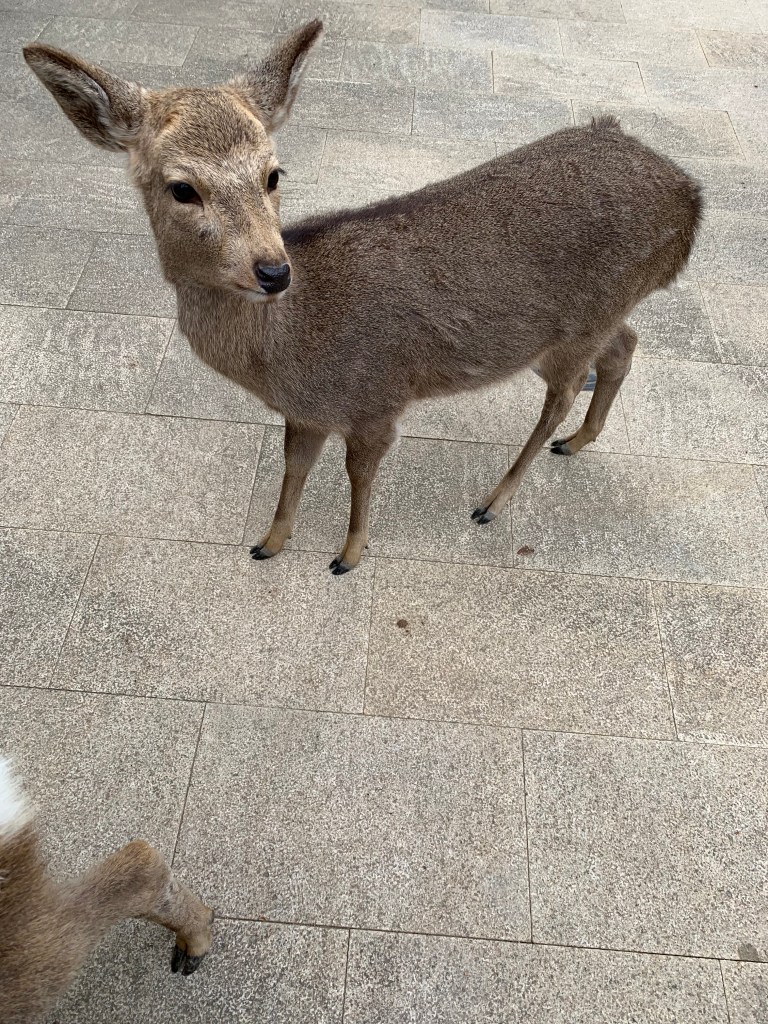
Nara is famous not only for its Buddhist and Shinto structures, but also for the Kasugayama Primeval Forest, and even more notably, an abundant population of sika deer that roam freely through the town, and particularly in Nara Park, where both Tōdai-ji and Kasuga Taisha are located. These deer are well-known for their love of senbei, or rice crackers, which they have learned to ask for from tourists by approaching and lowering their heads in a bow.
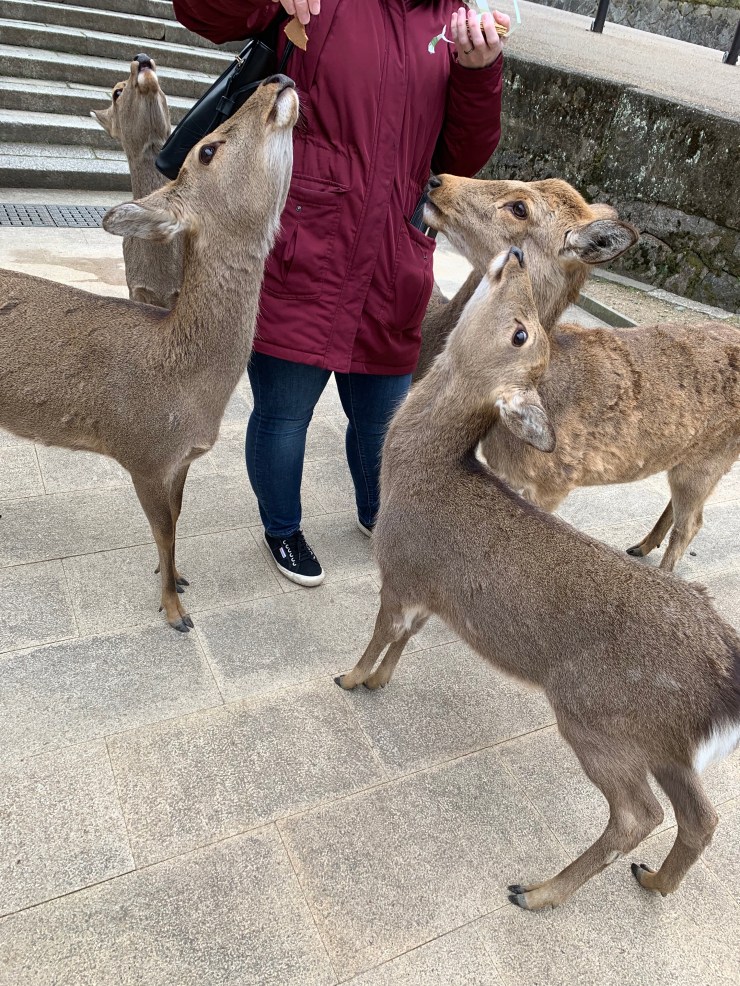
We stayed in a small, recently-opened guest house in Nara Park, within walking distance of several bus stops as well as the shrines and temples themselves, and it was on our morning walk toward Tōdai-ji that we encountered the deer directly, nearly blending into the brownish winter scenery.
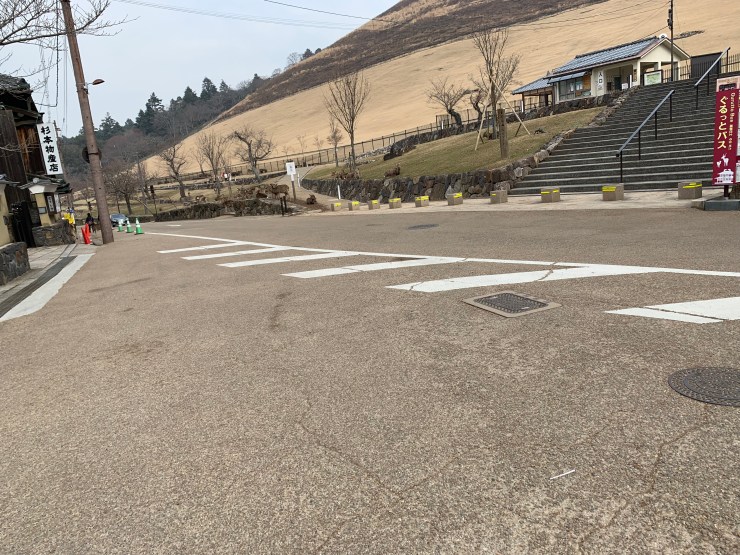
After walking down a mostly empty road, passing shops that wouldn’t open for a while yet, we stumbled across one of the park’s other shrines: Tamukeyama Hachiman-gū (手向山八幡宮), a mere 7 minute walk directly east of Tōdai-ji.
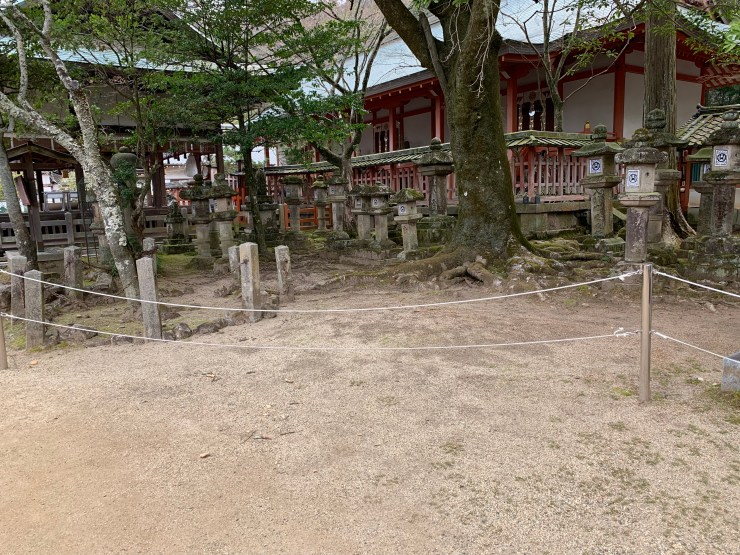
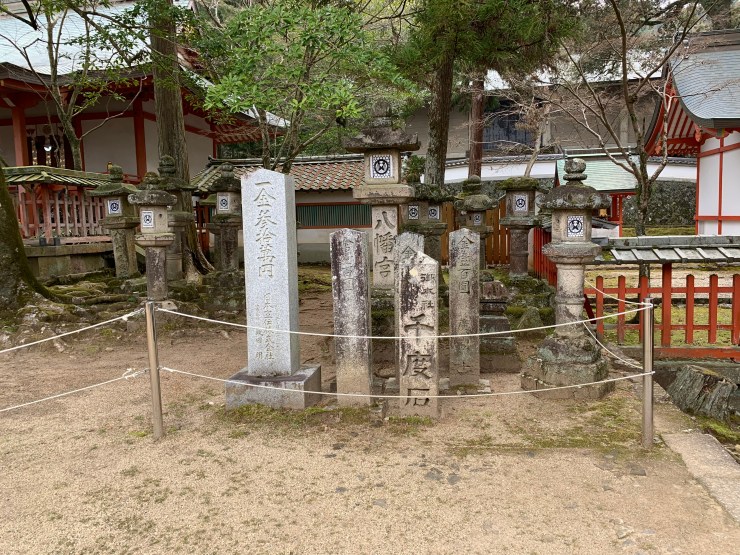
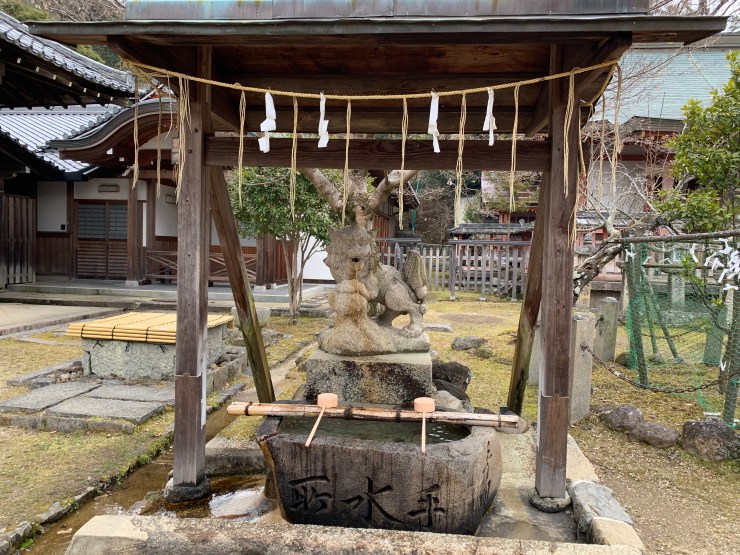
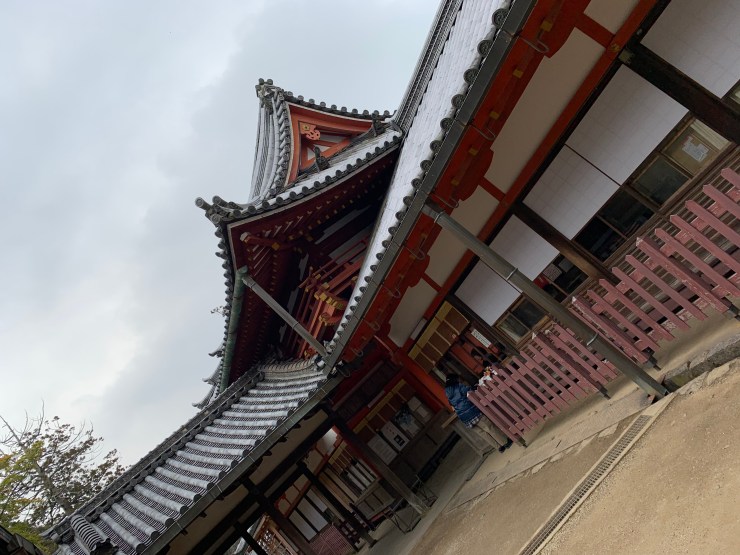
Founded in the year 749, Tamukeyama is dedicated to the kami known as Hachiman, who is a tutelary god of warriors and the divine protector of Japan. The shrine also houses the spirits of the Emperors Ojin, Nintoku, and Chūai, as well as that of Empress Jingū, who is traditionally venerated at a kofun tomb in Nara.
The next destination was Tōdai-ji. We entered from the east, rather than coming up through the Great Southern Gate, Nandaimon (南大門), which made for a less-traditional first experience (though I don’t regret this in the slightest). The first part of the main temple complex we saw was the Chūmon (中門), or Middle Gate, and the Mirror Lake in front of it, with the Daibutsuden (大仏殿), or Great Buddha Hall, rising into the skyline in the background.
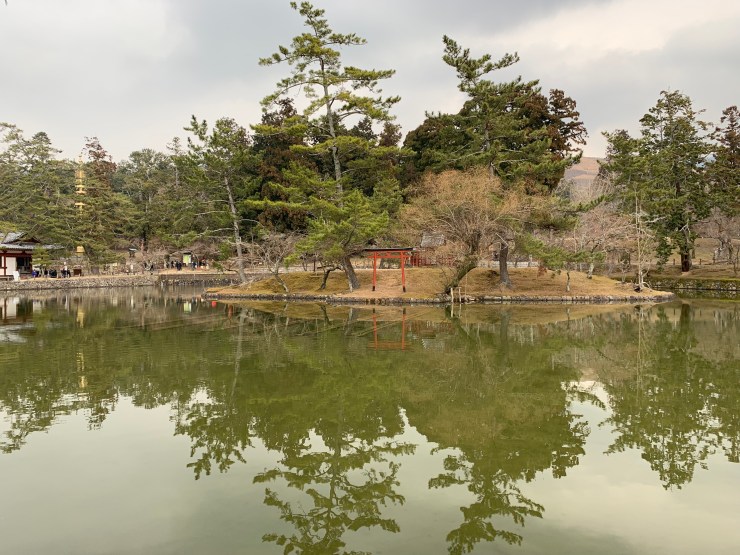
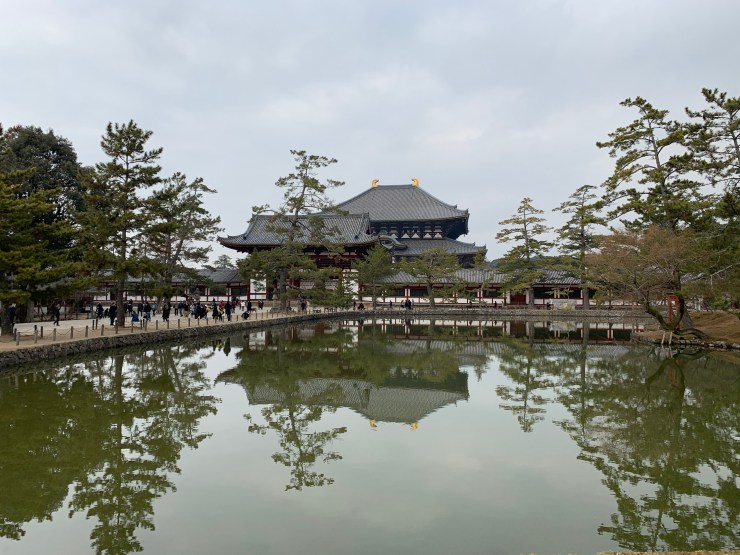
Going through the Chūmon is the way to the Daibutsuden– at the time we went, the line for admission went quickly (600 yen per person, a little less than $6 USD), and there weren’t that many other tourists around, which is why I try to make a point of going early.
It is not possible to describe how big this building is.
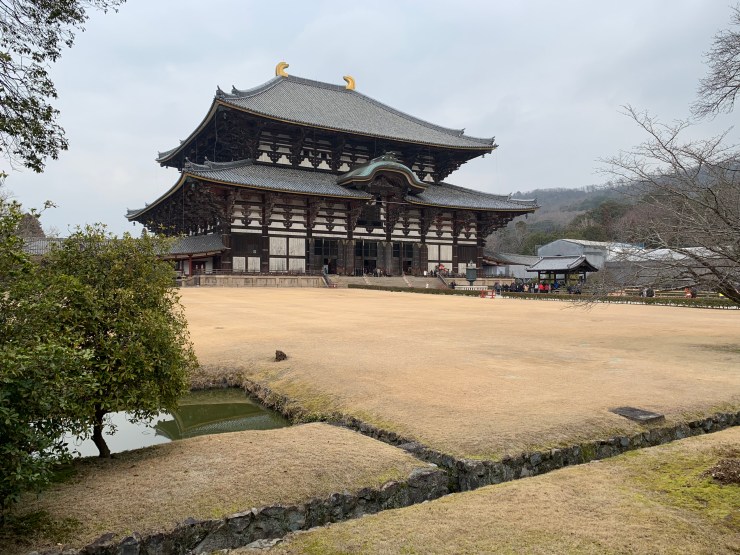
Trying to capture the scale of it without an ultra-wide lens felt pretty much impossible.
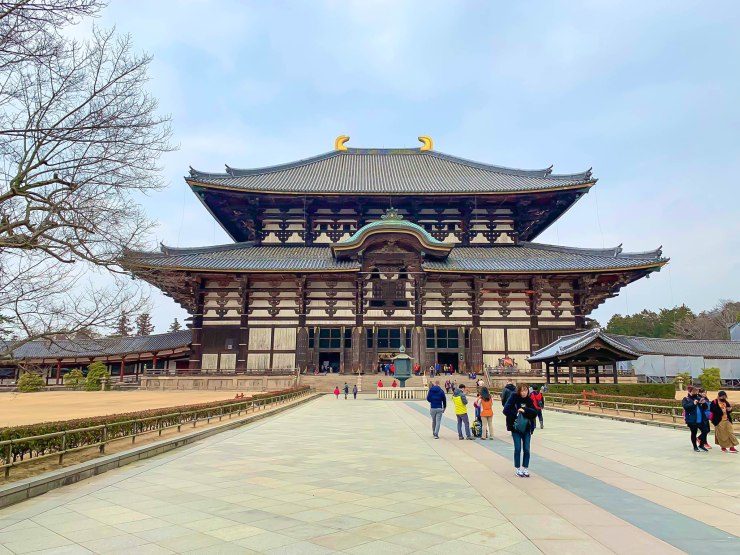
It is huge.
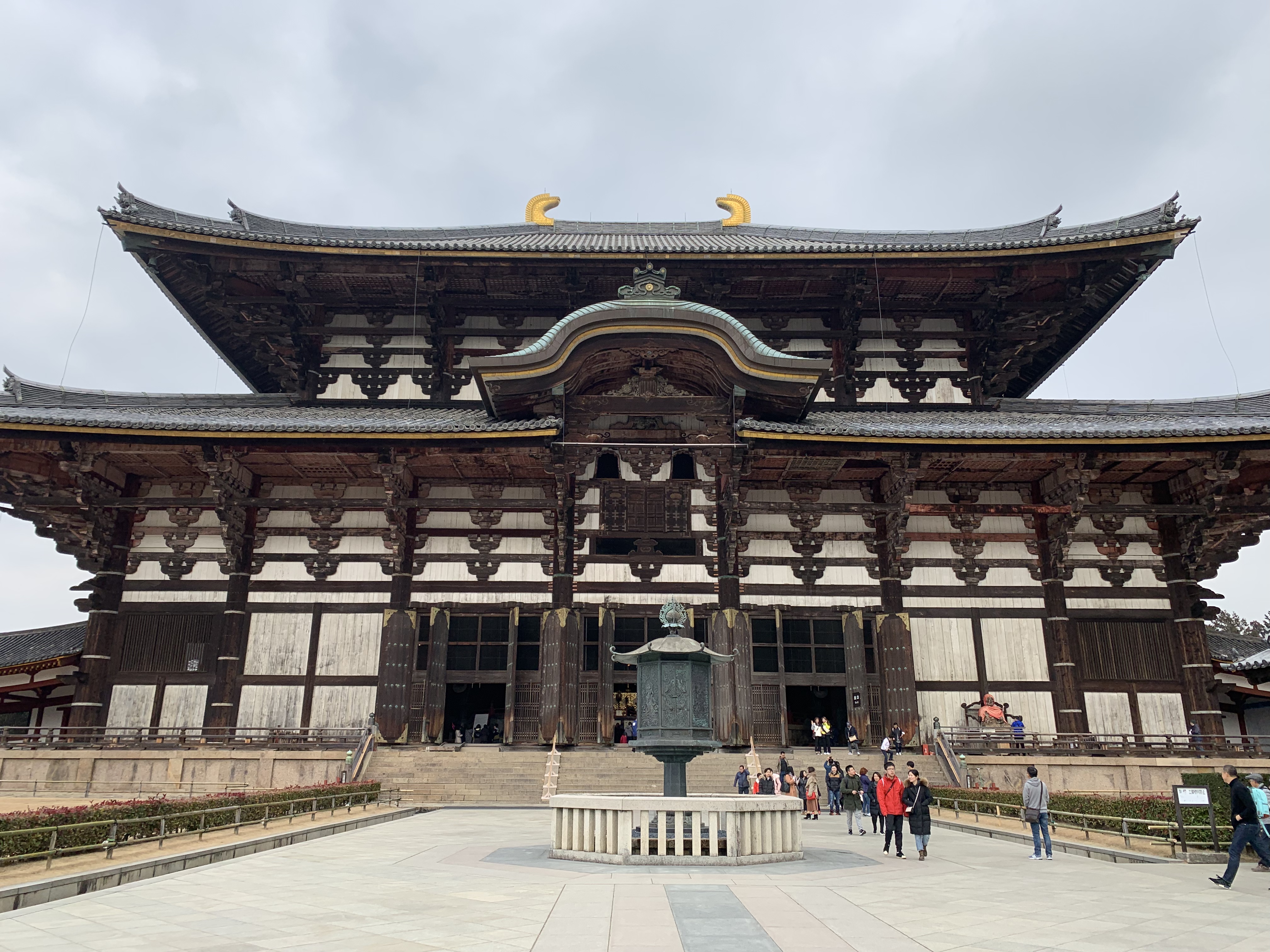
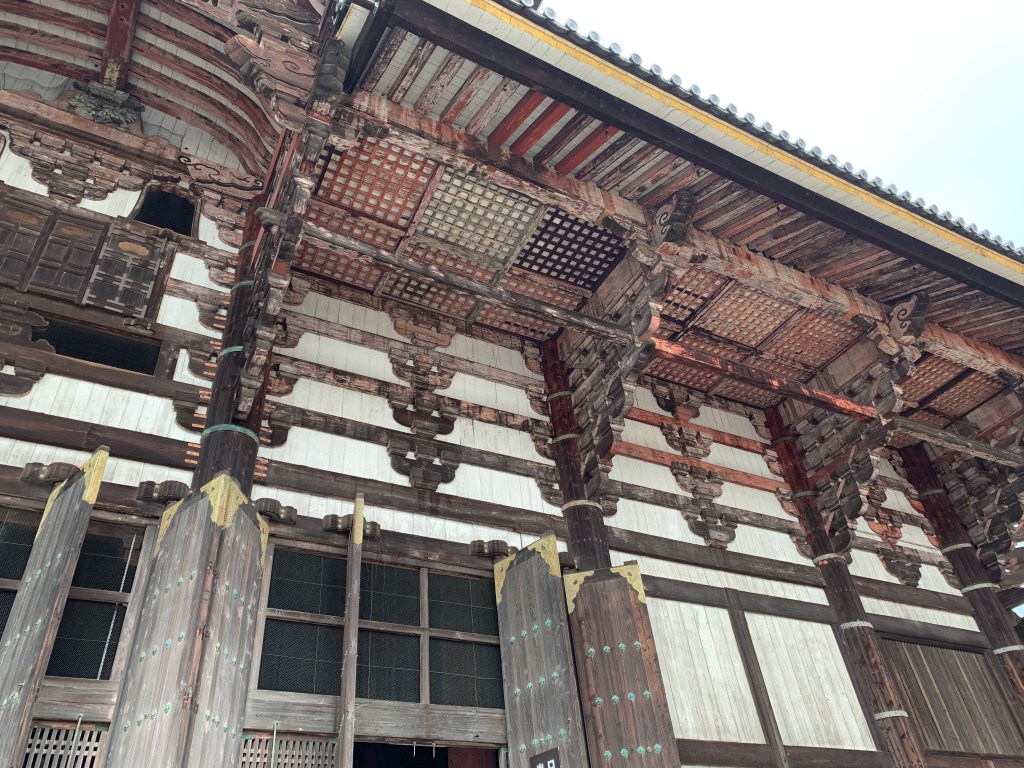
It is also very visibly old.
Tōdai-ji’s origins date back to a temple founded in 728 to house the spirit of Crown Prince Motoi, who died a year after his birth, and expanded over time as it grew in importance, serving for a time as the administrative center for provincial temples, as well as for Japan’s 6 Buddhist schools. The current Daibutsuden has been rebuilt twice after being damaged by fire. The current structure, completed in 1709, is actually 30% smaller than the preceding one, despite still measuring a massive 187 ft. (57m) long by 106 ft. (50m) wide, and until 1998, it held the title of the world’s largest wooden building.
Upon approaching the entrance to the hall, you’re greeted with another mind-bogglingly huge thing: the Daibutsu itself.
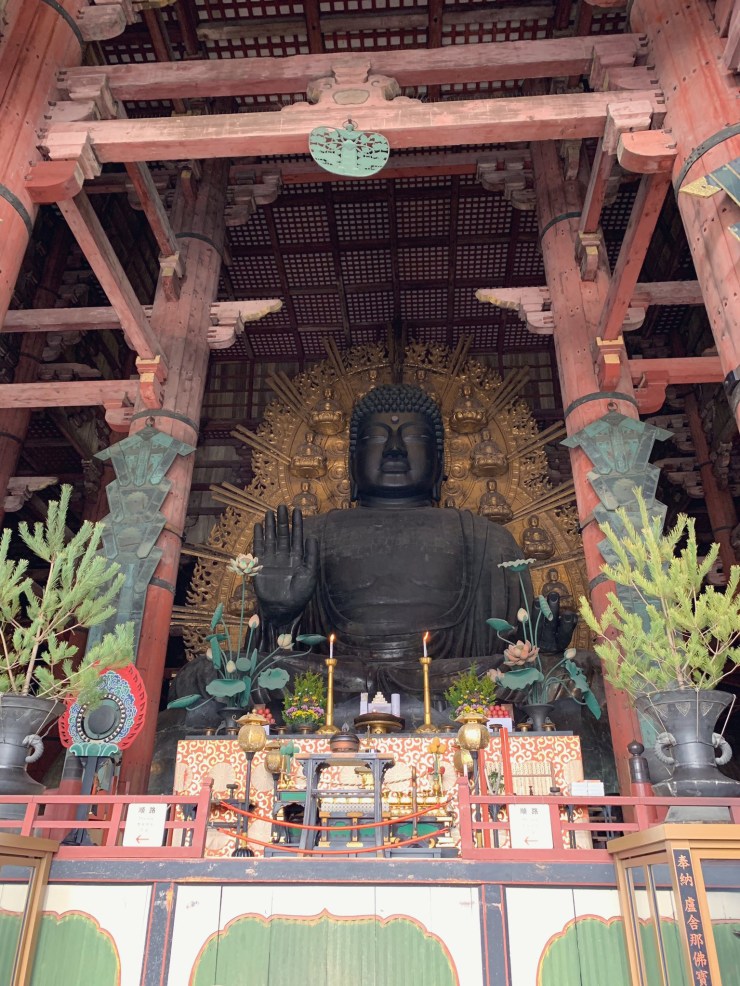
This was even more difficult to capture in terms of scale. The measurements given by the temple are as follows:
Height: 49 ft. 2 in. (14.98m)
Face: 17 ft. 6 in. (5.33m)
Eyes: 3 ft. 4 in. (1.02m)
Nose: 1 ft. 8 in. (0.5m)
Ears: 8 ft. 4 in. (2.54m)
The shoulders measure approximately 91 ft. 10 in. (28m) across, and the golden halo behind the figure has a diameter of 87 ft. (57m) and contains 16 images, each 8 ft. (2.4m) tall. There apparently are 960 curls upon the Buddha’s head.
The Daibutsuden and the Daibutsu within were more or less crowd-funded. In 743 Emperor Shōmu issued an edict stating that the people should involve themselves more directly with the construction of new temples, reasoning that such devotion and piety would move the Buddha to protect Japan, preventing further catastrophe in an already calamitous time. Thus, according to temple records, more than 2.6 million people helped to build the Daibutsu and its hall, mostly in the form of donations of materials and food, and approximately 350,000 people directly helped with construction. The Daibutsu was completed in 751, though the project came at a great cost to the Japanese economy, having relied on importing all of the gold as well as using up most available bronze.
The Daibutsu has been recast several times, particularly due to it suffering damage in disasters such as earthquakes. The current hands date from the Motoyama Period (1568-1615), and the head from the Edo Period (1615-1867), though to my knowledge the legs and lotus seat are original.
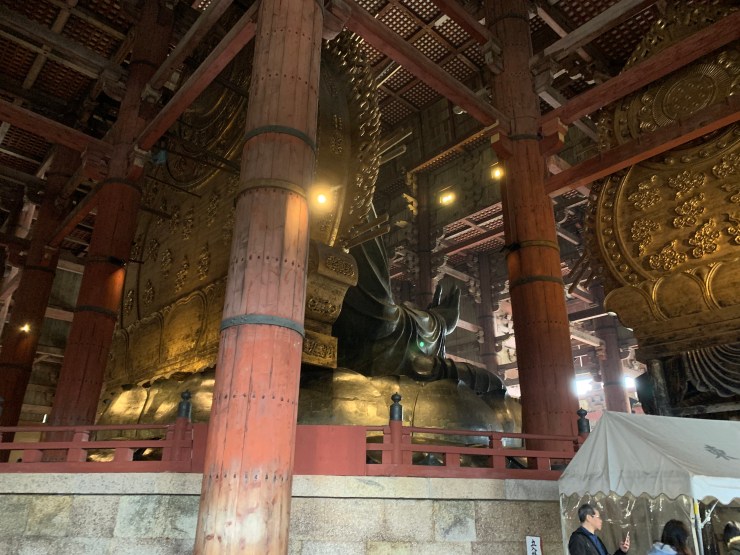
The inside of the temple is wide and spacious, the ceilings rising up for ages, and even the large statues peppering the interior fail to take up any significant space.
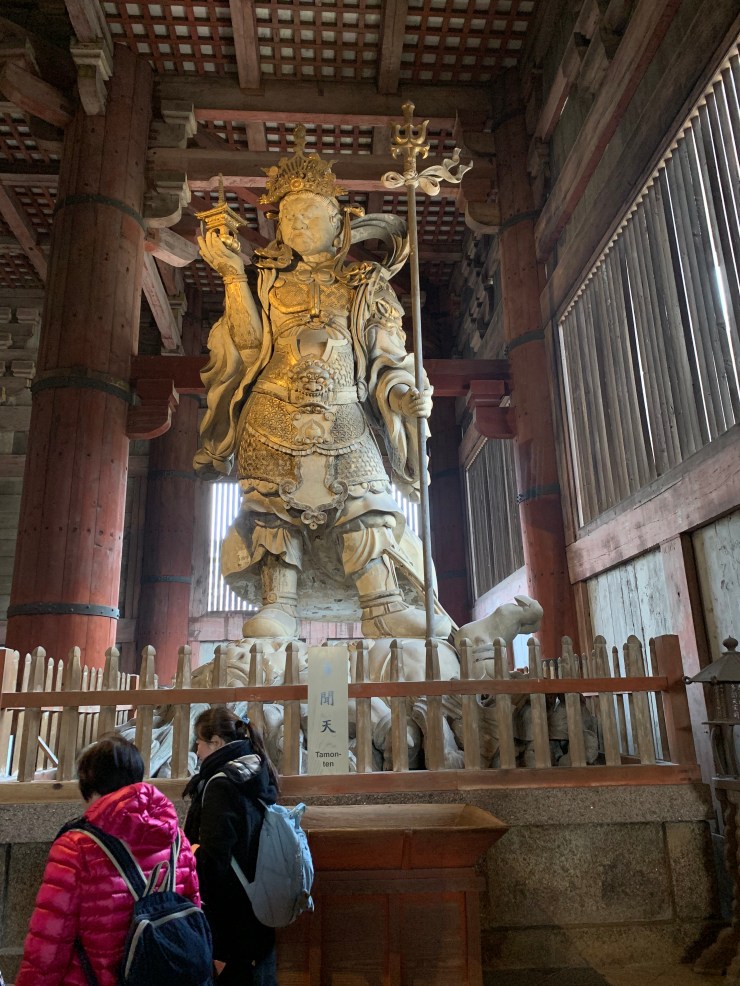
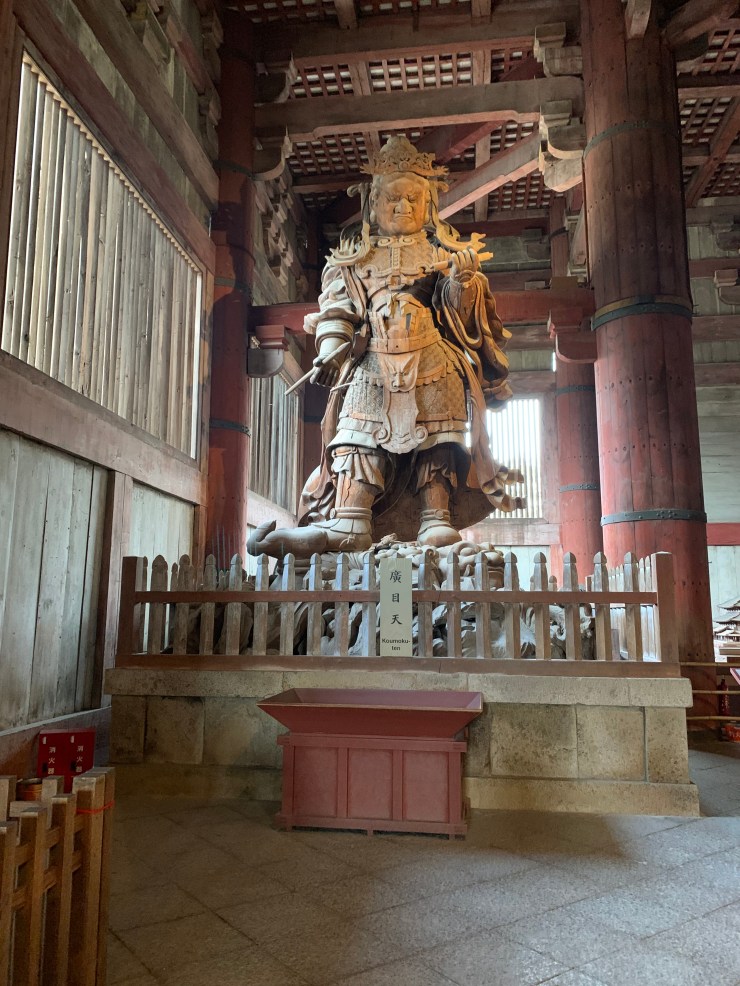
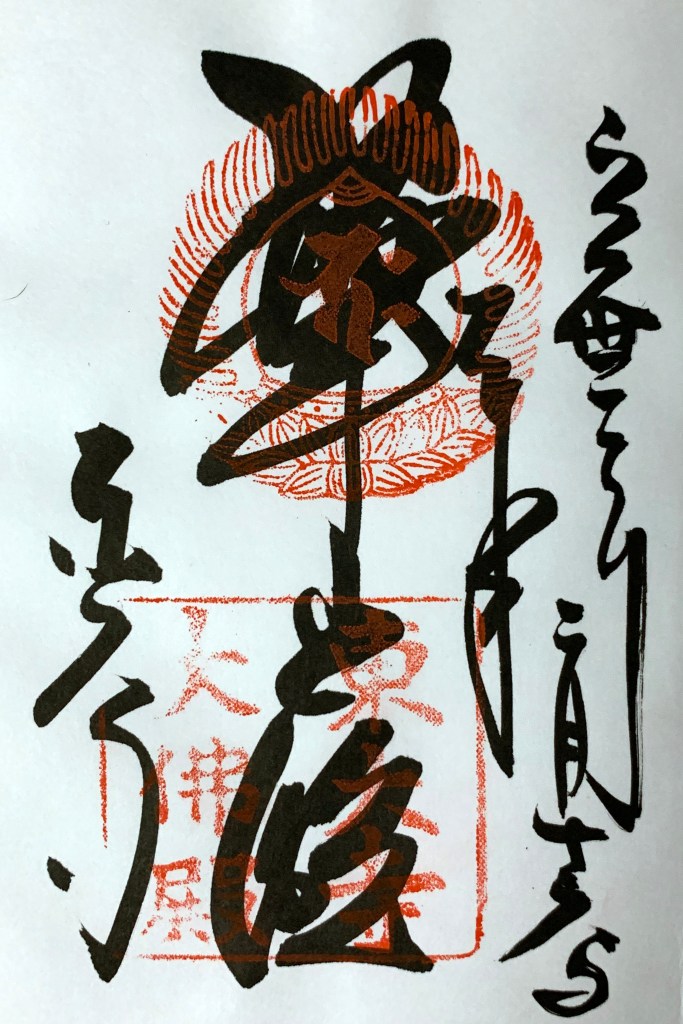
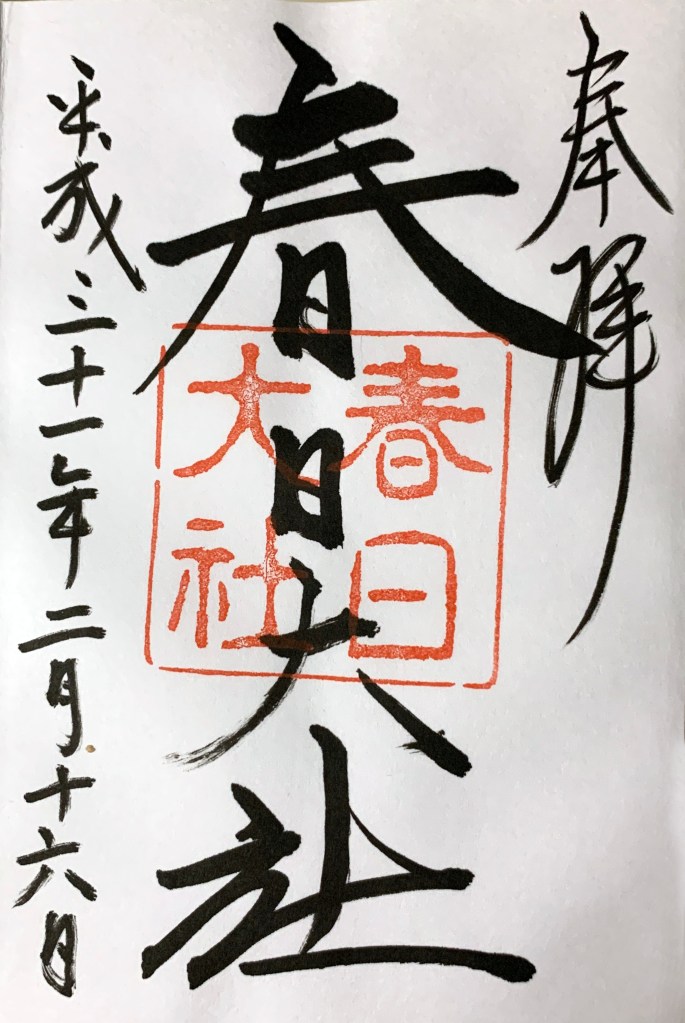
At the end of this slow meandering around the interior of the Daibutsuden, I was able to receive my goshuin (御朱印), a hand-written seal featuring the symbol of the temple or shrine, the name of the temple or shrine, and the date of the visit. These are often seen as a sort of “certificate” of having visited the location and paid your respects to it, and people collect them in special books specifically for these seals– I try to get one at every shrine or temple I visit, as each one is unique.
Having fulfilled what was more or less a bucket-list dream, it was time to move on toward Kasuga Taisha. On the way out, though, we took the route straight south, passing through Tōdai-ji’s Nandaimon, which is the main gate of the temple.
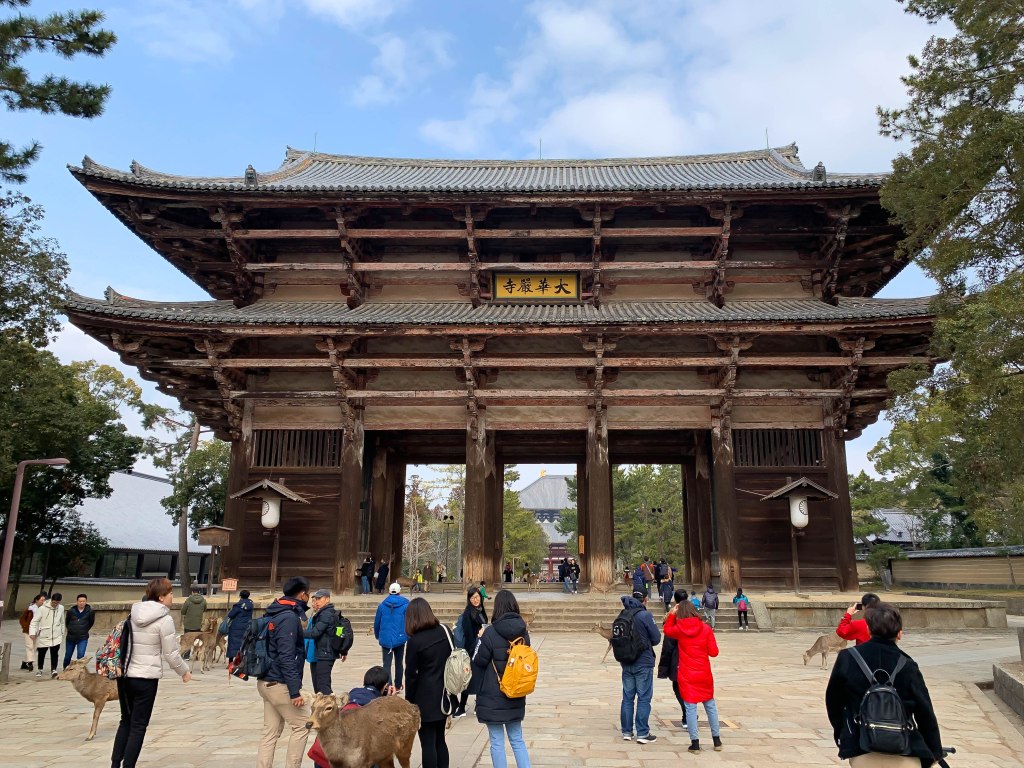
This gate, originally constructed during the Nara period (710-794), was destroyed by a typhoon during the Heian period (794-1185) and was subsequently rebuilt between 1199 and 1203 in the Daibutsuyō style.
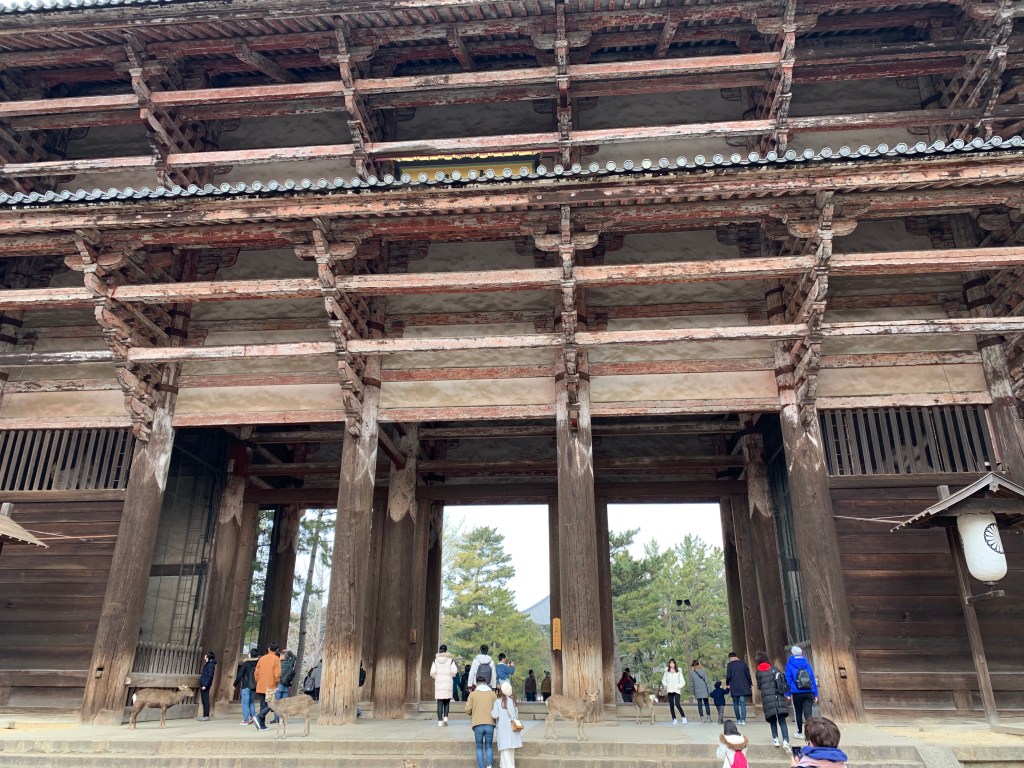
Again, the scale was impressive.
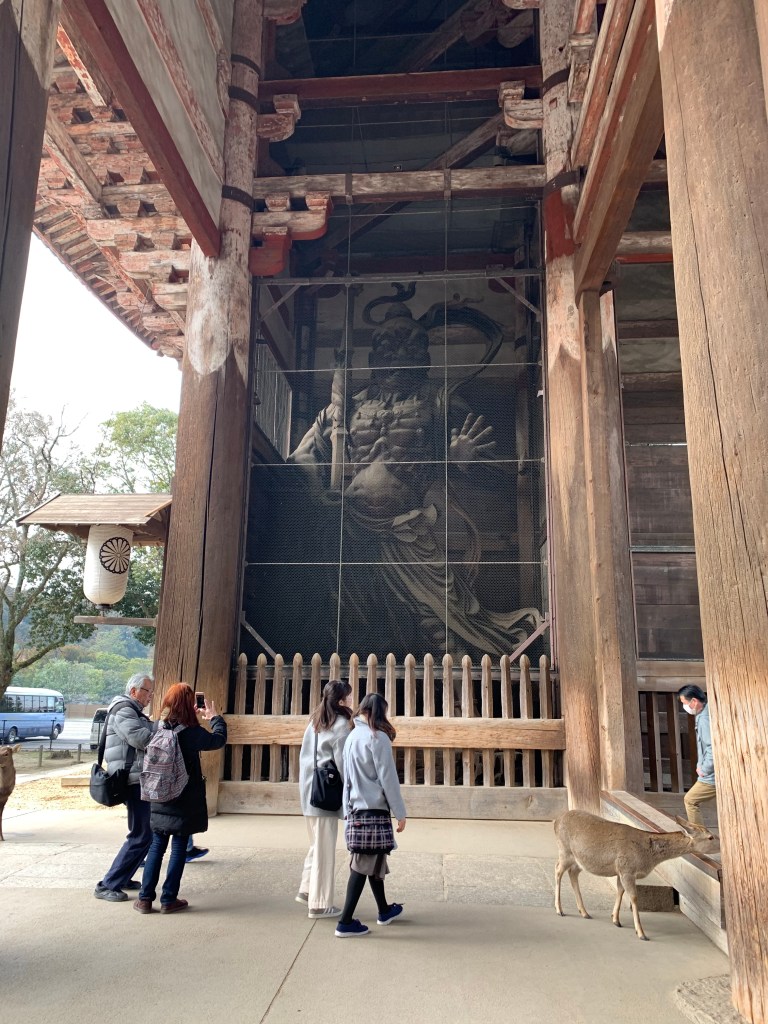
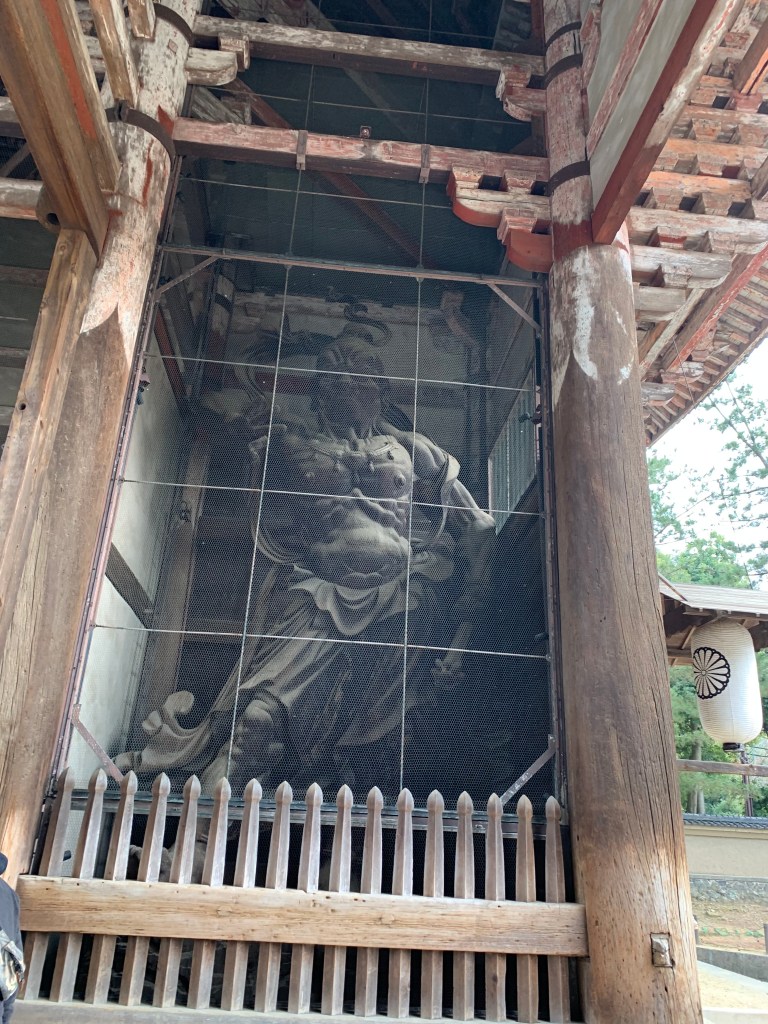
Guarding the Nandaimon are a pair of fierce-looking statues, referred to as Niō (literally “two kings”). They are an a-un pair called Ungyo and Agyo; they can be told apart by having a closed and open mouth, respectively.
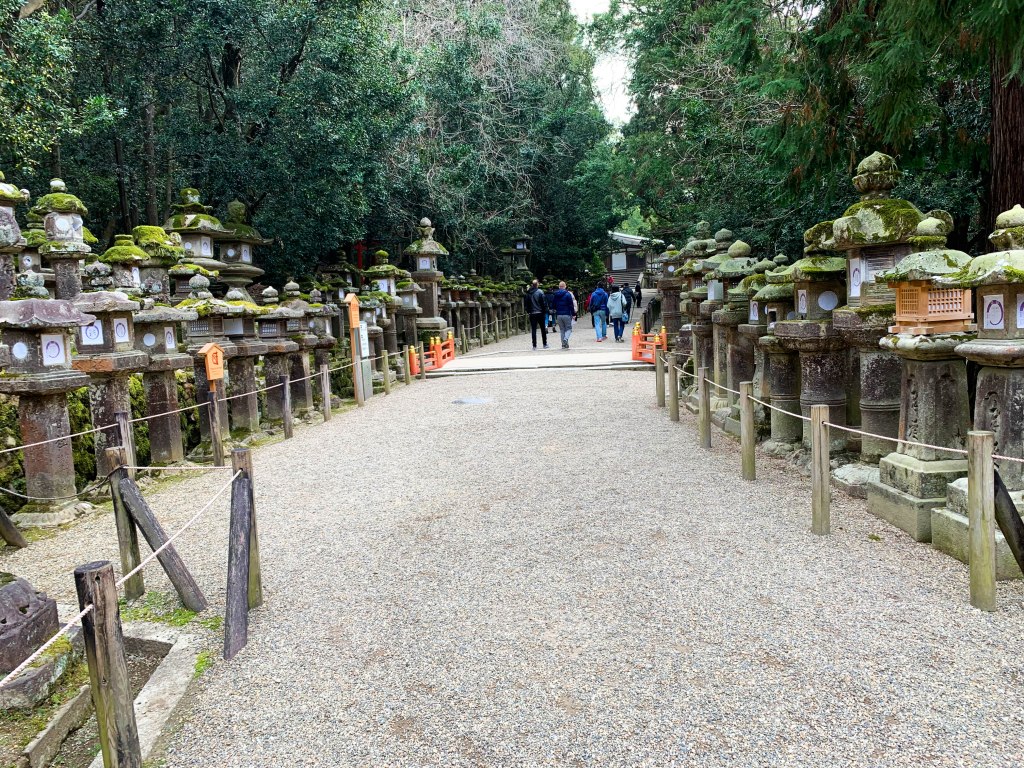
Moving on to Kasuga Taisha, the atmosphere changed along with the scenery. Instead of a relatively open area, we were covered by a forest canopy, our path delineated by a seemingly unending trail of stone lanterns. The shrine lies directly adjacent to the Kasugayama Primeval Forest, an old-growth forest that is nearly entirely untouched by humans, and the trees and other plants create an enclosed, mystical feeling.
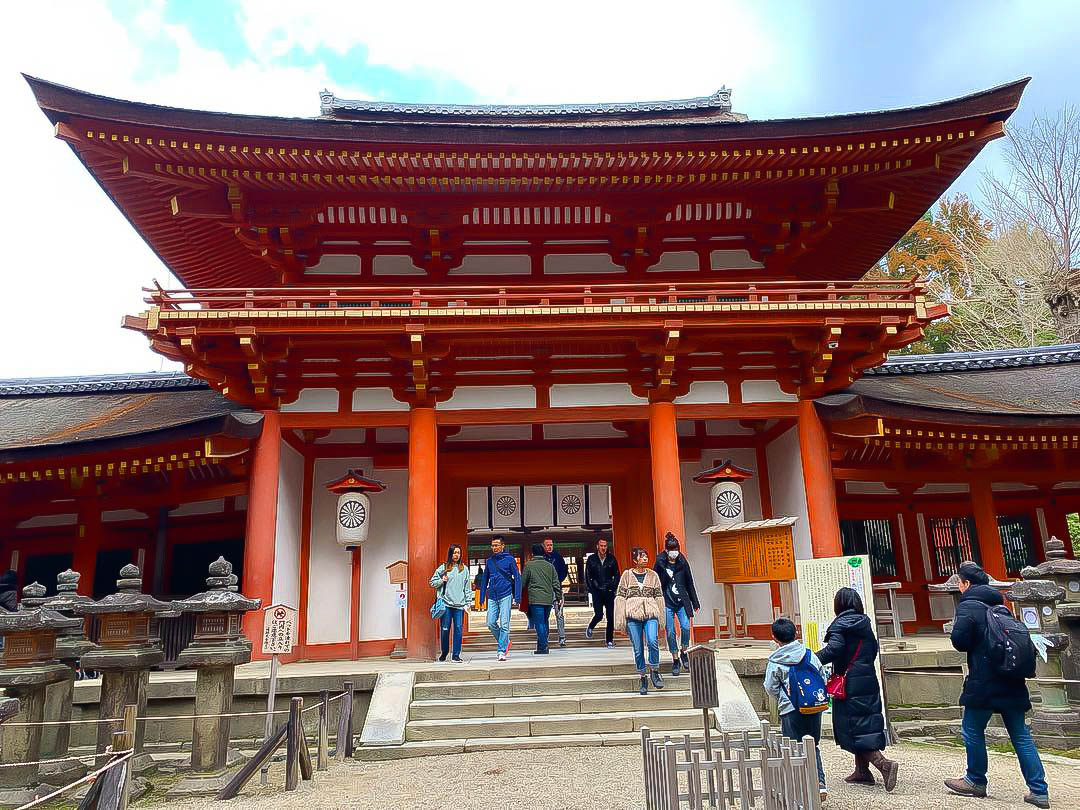
In contrast to Tōdai-ji’s ancient-looking natural hues, Kasuga Taisha’s main buildings stand out dramatically from the surrounding foliage with their traditional vermilion coloring. The colors and condition of the shrine are maintained every 20 years, in a ceremony called shikinen zotai.
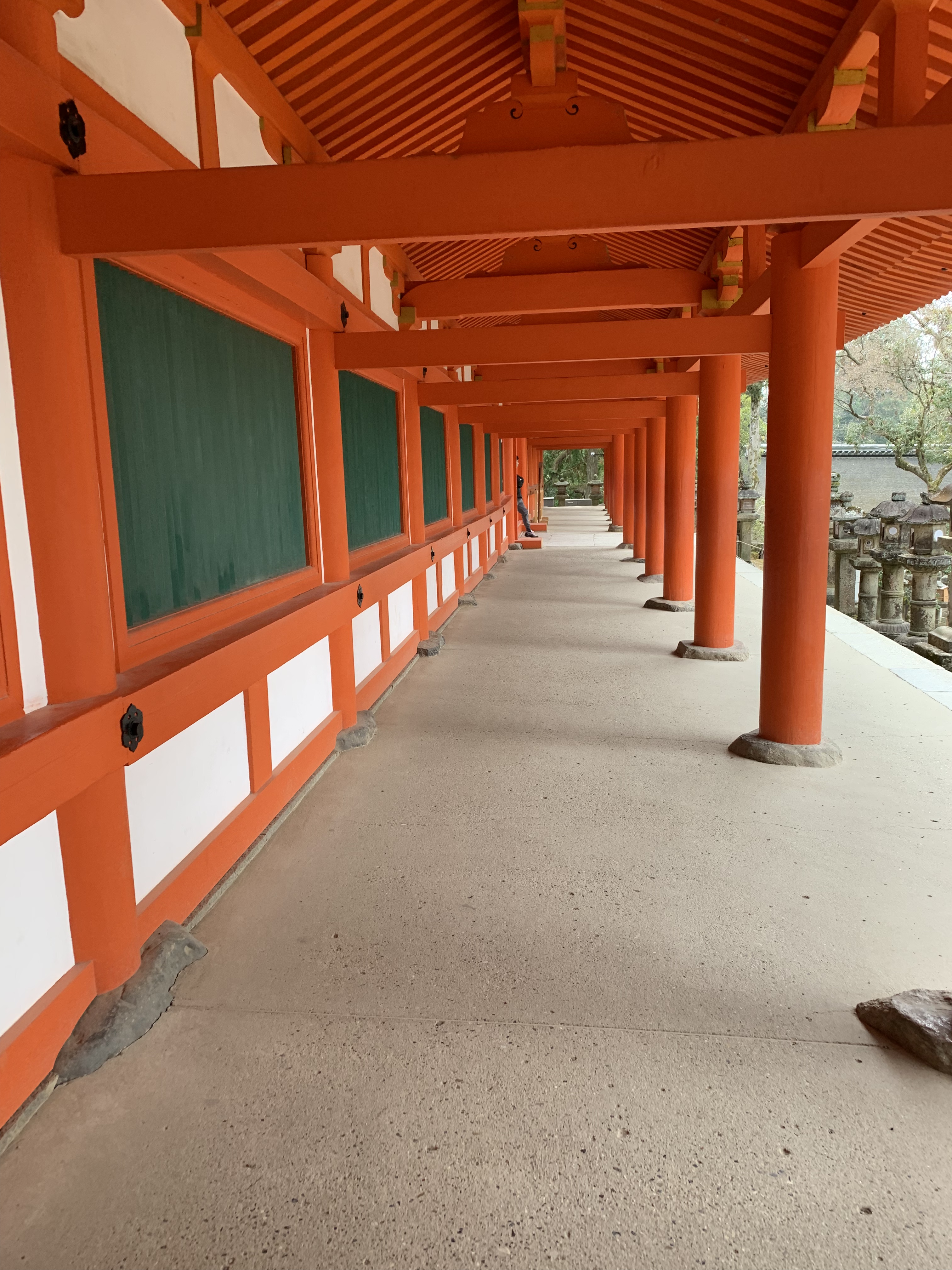
Not that it’s any less ancient than Tōdai-ji despite its relatively fresh paint. From Kasuga Taisha’s English website:
Ancient myths tell us that about 1300 years ago when the national capital was built in Nara, Takemikazuchi-no-mikoto came all the way from Kashima Shrine (Ibaraki Prefecture) to Mt. Mikasa, which is considered a holy mountain, to dwell on its summit “Ukigumo-no-mine” for the prosperity of the nation and happiness of the people. Later on, when Tempyo Culture flourished, the political leader Fujiwara-no-Nagate built magnificent buildings on the present site of the shrine as ordained by Empress Shotoku. On November 9, 768, he enshrined several gods here, namely Futsunushi-no-mikoto from Katori Shrine (Chiba Prefecture), and Amenokoyane-no-mikoto and Himegami from Hiraoka Shrine (Osaka Prefecture). This is how Kasuga Taisha began.
Officially established in 768, the shrine gained importance and Imperial recognition during the Heian period, and from 1871-1946, Kasuga Taisha was designated as being in the top rank of official government shrines, following the Modern System of Ranked Shinto Shrines, along with other notable names such as Iwashimizu Hachiman-gū, Itsukushima Jinja, and Meiji Jingū.
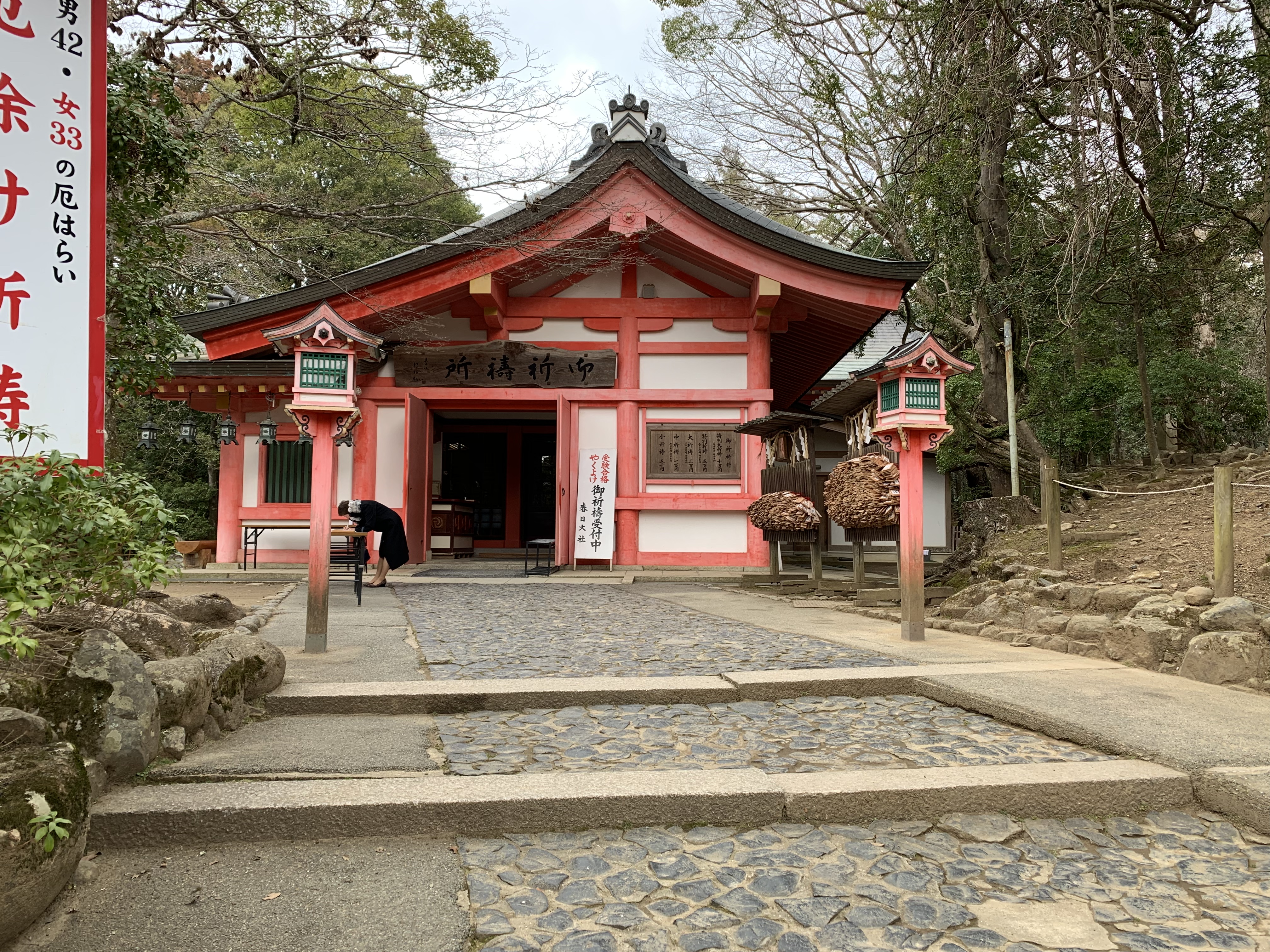
By the time we finished this visit, I was feeling pretty worn out from quite a lot of walking, so I took far fewer pictures, especially as we didn’t end up paying the fee to walk around inside (something I would like to do when we eventually return). However, I managed to get my goshuin here as well, after wandering around through the shrine’s various structures trying to figure out which one had the person who could give me the seal in the first place.
This concluded the quick Nara trip– we were off on our journey to Kobe the next morning. But it remains one of my favorite experiences in Japan so far; the scale and grandeur of these historical buildings was breathtaking, as was the variety of the park’s scenery, and I hope to go back in the future to get new goshuin (it’s a new era now, meaning the seal will be slightly different!) and visit other shrines and temples within the park and around the area.
I’m happy to share more info about my visit in Nara, as well as about shrines and temples in general, but I expect to do more posts about others I’ve visited and about things like goshuin and historical architecture, so please stay tuned for more.
 goshuin gaijin